






What Documents Should I Gather to Prepare My Income Tax Return?
Updated on November 5, 2025
Below is a list of the most common items you should gather for preparing your 2021 individual income tax return. Each individual's tax situation is different; not all items may apply to you. For a list of documents to gather for other tax years, click here.
-
IRS Transcripts – We highly recommend you login to your IRS Individual Account at www.irs.gov/account and download and provide us with your "2021 Account Transcript" and "2021 Wage and Income Transcript". These transcripts will provide us with vital information to help us prepare a more accurate tax return for you. The online IRS account will also give you access to lots of information such as account balances, payments made, payment options, IRS letters/notices, and various transcripts. To view transcripts after logging in to your online IRS account, go to the "Records and Status" tab, select "Tax Records", click the blue button labeled, "View Transcripts"
-
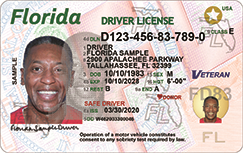
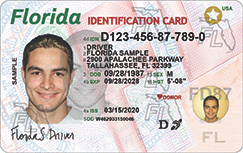
Identification – A non-expired government issued photo identification document for yourself AND your spouse (if married filing jointly). RECOMMENDED: state issued driver's license or state issued identification card
-
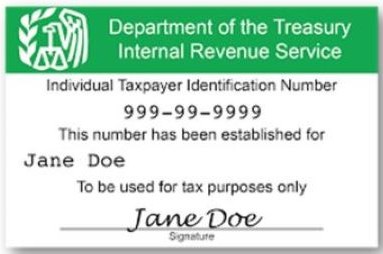
Social Security Card(s) – Please provide Social Security card information for yourself, spouse and dependents. We also need birth dates for everyone on the tax return. If the person does not have a Social Security number, then we will need an IRS Individual Taxpayer Identification Number (ITIN) for that person. (Returning clients do NOT need to provide this information for anyone shown on last year’s tax return unless there is a change)

-
Prior Year Tax Returns – Please provide complete copies of the federal and state income tax returns (including all worksheets) for tax years 2018, 2019 and 2020. (Returning clients do NOT need to provide this information)
-
 The EXACT amount of your
Third Economic Impact Payment - EIP3 (also known as a Stimulus
Payment) including any plus-up payment you may have received
after filing your 2020 income tax return. The IRS mailed
Notice 1444-C
The EXACT amount of your
Third Economic Impact Payment - EIP3 (also known as a Stimulus
Payment) including any plus-up payment you may have received
after filing your 2020 income tax return. The IRS mailed
Notice 1444-C
 to those who received EIP3. An additional IRS letter was mailed
for any plus-up payment. You should have received IRS Letter
6475 in January 2022 showing the amount of your "2021 Economic
Impact Payment 3". These amounts are NOT taxable, but are
used to calculate any additional amount you may be entitled to
claim as a "Recovery Rebate Credit (RRC)" on your 2021 federal
income tax return. If you do not know the EXACT
amount of your EIP3, you can
login to your IRS Individual Account at
www.irs.gov/account and click on the "Records and
Status" tab, then click on the "View Transcripts" button. Under
the "Account Transcripts" section, click "Show More
Transcripts", download the 2021 Account Transcript. This
transcript will show any economic impact payments that were
issued
to those who received EIP3. An additional IRS letter was mailed
for any plus-up payment. You should have received IRS Letter
6475 in January 2022 showing the amount of your "2021 Economic
Impact Payment 3". These amounts are NOT taxable, but are
used to calculate any additional amount you may be entitled to
claim as a "Recovery Rebate Credit (RRC)" on your 2021 federal
income tax return. If you do not know the EXACT
amount of your EIP3, you can
login to your IRS Individual Account at
www.irs.gov/account and click on the "Records and
Status" tab, then click on the "View Transcripts" button. Under
the "Account Transcripts" section, click "Show More
Transcripts", download the 2021 Account Transcript. This
transcript will show any economic impact payments that were
issued -
The EXACT amount of your
Advance Child Tax Credit Payments. This is shown on
IRS Letter 6419
which was mailed in January 2022 to all taxpayers who received
advance child tax payments. You can
login to your IRS Individual Account at
www.irs.gov/account and click on the
"Records and Status" tab, then click on the "View Transcripts"
button. Under the "Account Transcripts" section, click "Show
More Transcripts", download the 2021 Account Transcript. This
transcript will show any Advance Child Tax Credits. The IRS
issued credits from July 2021 through December 2021 up to $300
for each child under age 6 and up to $250 for each child ages 6
through 17. These advance payments will need be reconciled on
your 2021 federal income tax return
-
Information needed regarding
Paycheck Protection Program Loans (PPP)
and
Economic Income Disaster Loans (EIDL) and EIDL Grants
-
Direct Deposit
– Effective October 1, 2025, under
Presidential Executive Order 14247, paper tax refund checks
by postal mail will only be issued in very limited circumstances.
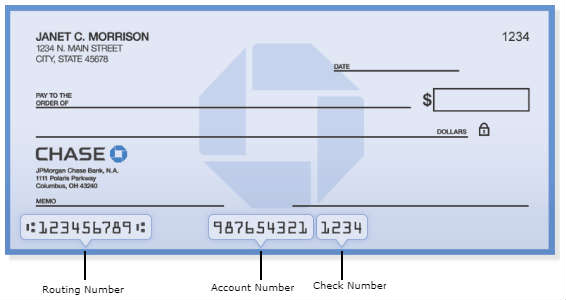
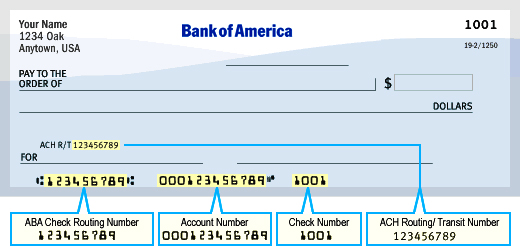
We highly recommend direct deposit of your tax refund. Please provide us with
the routing number AND account number for your financial institution
personal checking or savings account
Sample Checks Showing Location of Routing Number and Account Number
-
Identity Protection PIN – If you, your spouse (if filing jointly), and/or dependents were a victim of tax identity theft, OR an IRS Identity Protection PIN (IP PIN) was voluntarily requested, we will need the unique six-digit IP PIN assigned to the person. Each year the IRS issues the person a NEW Notice CP01A with an updated six-digit IP PIN to use on ALL tax returns that are filed within that calendar year. This IP PIN is REQUIRED to file a federal income tax return! You can obtain your IP PIN by accessing your IRS Individual Account at www.irs.gov/account. After logging in, go to "Profile", then select "Identity Protection PIN" to see the six-digit PIN. You can also go to the "Notices and Letters" tab to view the official Notice CP01A "We Assigned you an IP PIN"
-
Copy of Divorce Decree or Separation Agreement (if applicable)
-
Copy of Death Certificate (if applicable) – If a spouse or dependent being claimed on the tax return is deceased at the time of tax filing, please provide a copy of the death certificate. The cause of death is not required to be shown on the certificate
-
Noncustodial Parent Claiming Child – If you are claiming your child AND you are considered the noncustodial parent for tax purposes (the child spent LESS nights with you during the year than the other parent) and you were never married OR your divorce or separation took place AFTER December 31, 2008, we will need a completed, signed, and dated Form 8332
from the custodial parent -
Estimated Tax Payments – Records showing amounts and dates of any estimated tax payments were sent to the IRS and/or state tax agencies for tax year 2021. The due dates of these estimated tax payments were April 15, 2021, June 15, 2021, September 15, 2021 and January 18, 2022. If you are not sure of the EXACT dates and amounts of your IRS estimated tax payments, you can access your IRS Individual Account at www.irs.gov/account then go to the "Payments" tab, select “Payment Activity”, and then scroll down to “Processed Payments”
-
W-2's, 1098s, and 1099's – Below is a list of the most common forms that may be needed:
-
Form W-2 – Wage and Tax Statement
-
Form W-2G – Certain Gambling Winnings
-
Form SSA-1099 – Social Security Benefit Statement
-
Form 1098 – Mortgage Interest Statement
-
Form 1098-C – Contributions of Motor Vehicles, Boats, and Airplanes
-
Form 1098-E – Student Loan Interest Statement
-
Form 1098-MA – Mortgage Assistance Payments
-
Form 1098-T – Tuition Statement
-
Form 1099-A – Acquisition or Abandonment of Secured Property
-
Form 1099-B – Proceeds from Broker and Barter Exchange Transactions
-
Form 1099-C – Cancellation of Debt
-
Form 1099-DIV – Dividends and Distributions
-
Form 1099-G – Certain Government Payments
-
Form 1099-INT – Interest Income
-
Form 1099-K – Payment Card and Third Party Network Transactions
-
Form 1099-LTC – Long-Term Care and Accelerated Death Benefits
-
Form 1099-MISC – Miscellaneous Information
-
Form 1099-OID – Original Issue Discount
-
Form 1099-PATR – Taxable Distributions Received From Cooperatives
-
Form 1099-Q – Payments from Qualified Education Programs (Under Sections 529 and 530)
-
Form 1099-R – Distributions From Pensions, Annuities, Retirement or Profit-Sharing Plans, IRAs, Insurance Contracts, etc
-
Form 1099-S – Proceeds from Real Estate Transactions
-
Form 1099-SA – Distributions From an HSA, Archer MSA, or Medicare Advantage MSA
-
-
Form 1095-A – Health Insurance Marketplace Statement – If you, your spouse and/or dependents had health coverage at any time during the year that was obtained through the federal government's Health Insurance Marketplace® (HealthCare.gov) – also known as ObamaCare OR a State Exchange, you MUST obtain Form(s) 1095-A
.
You CANNOT file your income tax return without this form
if any premium tax credit subsidies were allowed! (NOTE: If
you are claiming a person on your tax return, such as a child, and
someone else obtained the health insurance through the Marketplace
or State Exchange for that person, you will need to obtain the Form
1095-A from that person in order to prepare your tax return).
If any of your dependents are filing a separate tax return, you
MUST provide a copy of their tax return since their income
MAY be needed for the sole purpose of calculating your household
income. For information on how to obtain your Form 1095-A,
click here -
Unemployment Compensation – Form 1099-G is needed if any unemployment compensation was received during the year. To obtain a Florida Form 1099-G, click here
-
Business Activity – Sole Proprietor / Self-Employed / Independent Contractor / Subcontractor (Form 1099-NEC • Form 1099-K • Form 1099-MISC), we will need to know the annual gross income amount and the annual business expenses separated into different expense categories. If any assets were acquired that have a useful life of greater than one year, they may need to be depreciated or amortized. We will need a description of the asset, date placed in service for business purposes, cost, and business use percentage. If credit/debit cards were accepted and/or payments were received from any third-party payment networks such as Amazon®, eBay®, or PayPal®, you may receive a Form 1099-K showing gross amounts paid. You can download a “2021 Business Income & Expense Worksheet” to assist you in preparing this information
-
Rental Properties – Information is needed about the annual gross rental income received and the annual rental expenses separated into different expense categories, depreciation claimed on the property in prior years (if any) and property purchase information which may be shown on a HUD-1 Settlement Statement
,
ALTA Settlement Statement
OR
Closing Disclosure
.
You may
download a "Rental Income and Expense Worksheet" to assist you
in preparing this information. If the property was not considered
a rental property for the entire year, certain expenses will need
to be prorated -
Capital Assets – If assets were sold such as real estate, stocks, ETFs, and/or mutual funds, we will need to know about the cost or other basis of the assets, date of purchase/inheritance/gift. For stocks, ETFs, and mutual funds, we will need Form(s) 1099-B. For sale of real estate (including land), you may receive Form 1099-S. If you sold your primary residence and the sales price was $250,000 or more, the sale must be disclosed even if the sale is tax-free
-
Digital Assets – Cryptocurrency / Virtual Currency / NFTs (Non-Fungible Tokens) – If digital assets were sold, exchanged, and/or used to pay for goods or services, the gain or loss on these transactions are required to be reported. Please provide us with dates of acquisition and dates of sale/exchange/use. We will also need the values of the digital assets at the time of the transactions. The difference in the values will result in a capital gain or capital loss. Digital assets that have been held greater than one year are considered to be a long-term capital gain/loss. Digital assets that are held one year or less are considered to be a short-term capital gain/loss. If you received digital assets as income in the ordinary course of your business, these amounts must be added to your gross business income. Some examples of digital assets that have value are Bitcoin, Ethereum, and Dogecoin. NFTs are one-of-a-kind non-fungible tokens which have a unique code that cannot be duplicated. They are digital certificates of authenticity or ownership rights built on blockchain. Investors who have gains or losses from the sales or trades of NFTs are subject to the capital gain/loss rules. Creators of NFTs that sell the NFTs on the marketplace are subject to ordinary income tax on the profits. Having problems generating tax reports? Many companies such as Coinbase, Kracken and Cash App will let you link to a third-party provider to generate tax reports. Here are links to some of those third-party providers: ZenLedger • CoinTracker • CoinLedger
-
Schedule K-1 – Income, deductions, and credits from S-corporations, partnerships, estates, and/or trusts. Need a Schedule K-1 from a Publicly Traded Partnership (PTP)? You may be able to access it at www.taxpackagesupport.com
-
Alimony – If the original divorce decree or separation agreement was dated BEFORE January 1, 2019, alimony received is taxable income and alimony paid is a deduction. If alimony was RECEIVED, we will need the total amount received during the calendar year. If alimony was PAID, we will need ex-spouse’s Social Security number, date of original divorce or separation agreement, and total amount paid during the calendar year
-
Winnings – Gambling, lottery, prizes, awards, etc. Gambling winnings may be shown on Form W-2G and prizes and awards may be shown on Form 1099-MISC
-
Cancellation or Forgiveness of Debt(s) – If debts such as credit cards, auto loans, mortgages, etc., were cancelled or forgiven, please provide us with Form(s) 1099-C from the lender. Most forgiven student loans are tax-free and a Form 1099-C will NOT be issued
-
Foreclosure – If property was foreclosed, abandoned, or repossessed, please provide us with Form 1099-A from the lender. If there was a short sale on the property and the lender has forgiven all or part of the debt, please provide us with Form 1099-C from the lender
-
Foreign Income and Foreign Financial Accounts – Please contact us regarding Information needed on any foreign income, foreign inheritance, foreign financial accounts, and/or other foreign assets such as real estate
-
IRAs – Individual Retirement Accounts – Records showing CONTRIBUTIONS made to Traditional IRAs, and/or Roth IRAs. This information may be shown on Form(s) 5498. If an early premature DISTRIBUTION was taken from a Roth IRA, we will need to know about ALL contributions and distributions for ALL prior years
-
HSAs – Health Savings Accounts – Records showing CONTRIBUTIONS made to an HSA which may be shown on Form W-2 Box 12 with Code W and Form 5498-SA. If any funds in the HSA were used for medical or other purposes, these are DISTRIBUTIONS and we will need Form 1099-SA. If any DISTRIBUTIONS were made from an HSA that were NOT used for qualified unreimbursed medical expenses, we will need to know the amount
-
Itemized Deductions – Out of pocket medical and dental expenses such as health and dental insurance premiums (do not include pre-tax amounts through your employer), doctors, hospitals, labs, prescriptions, eye exams/glasses, medical/dental co-payments, home improvements done for medical purposes, number of miles driven for medical purposes, real estate taxes, sales tax, state and local income taxes, mortgage interest and points (Form 1098), mortgage insurance premiums - PMI (Form 1098), investment interest, charitable contributions, casualty losses in a federally declared disaster area and gambling losses (only up to the amount of your reportable gambling winnings)
-
Charitable Contributions for Non-Itemizers – If you do not qualify to itemize deductions, you can deduct up to $300 ($600 if married filing jointly) of qualifying cash charitable contributions. Cash charitable contributions include those made by cash, check, credit card or debit card as well as amounts incurred by an individual for unreimbursed out-of-pocket expenses in connection with the individual's volunteer services to a qualifying charitable organization
-
Unreimbursed Employee Job Expenses – ONLY for the following:
-
Armed Forces Reservists (for certain travel expenses more than 100 miles from home)
-
Qualified Performing Artists
-
Fee-Basis State or Local Government Officials (compensated on a fee basis rather than a salary)
-
Employees with Impairment-Related Work Expenses (costs necessary for physically or mentally disabled individuals to work)
-
-
Moving Expenses – ONLY for active-duty members of the Armed Forces who move due to a military order because of a permanent change of station may deduct certain moving expenses. Contact us for more information
-
Child and Dependent Care – If qualifying expenses were paid for child and dependent care, we will need the total amount paid to the provider, along with the name, complete address, and federal employer identification number (EIN) of the provider; Social Security number, if the provider is a person. You may use Form W-10 to obtain the provider's information. If you have more than one child that qualifies, we will need the amounts per child
-
Adoption Credit – If you are in the process of adopting a child or have adopted a child, please contact us for the information that we will need to potentially claim an adoption credit
-
Educator Expenses – Eligible educators (kindergarten through grade 12 teachers, instructors, counselors, principals or aides who work for at least 900 hours a school year in a school that provides elementary or secondary education as determined under state law) can deduct up to $250 ($500 if married filing jointly and both spouses are eligible educators, but not more than $250 each person) of unreimbursed qualifying educator expenses. Qualified expenses are amounts paid or incurred for participation in professional development courses, books, supplies, computer equipment (including related software and services), other equipment, and supplementary materials that are used in the classroom. For courses in health or physical education, the expenses for supplies must be for athletic supplies. Qualified expenses also include the amounts for personal protective equipment, disinfectant, and other supplies used for the prevention of the spread of coronavirus
-
Student Loan Interest – If student loan interest was paid on a qualified loan during the year, you may be able to deduct up to $2,500 in qualifying interest. Please provide Form 1098-E
-
Education Credits – Amounts paid for post-secondary education, such as college tuition, books, supplies and equipment for you, spouse and/or your dependents. Please provide us with the 2021 Form 1098-T that is issued to the student by the educational institution. Sometimes the student may have to login to their educational institution's online student portal to view and print the Form 1098-T. (NOTE: If the student was billed for tuition at the end of 2020 and it was not paid to the institution until early 2021, please provide us with a copy of the 2020 Form 1098-T for that student). For information on how to access Form 1098-T online at some educational institutions in Central Florida, click here. We highly suggest you get a "Financial Transcript" from the educational institution showing all payments (including student loan) payments they received for tuition and fees during year 2021. If funds were used from a qualified education program such as a 529 plan (example: Florida Prepaid College Program) or Coverdell Education Savings Account (ESA) to pay education expenses, we will need a Form 1099-Q
-
Energy Credits – Solar and Certain Energy Efficient Home Improvements – Documentation showing the date placed in service, description of the item described below, paperwork showing that it meets the requirement for a federal tax credit, and the amounts of any rebates. You may be entitled to a tax credit up to 30% of the cost for installing solar electric, solar water heating, wind energy systems, geothermal heat pumps, fuel cell property, and battery storage technology. Additional tax credits (subject to various limitations) are available for the following items:
-
Electric or natural gas heat pumps
-
Electric or natural gas heat pump water heaters
-
Natural gas, propane, or oil water heaters, or oil furnace, or hot water boiler, and biomass stove or boiler
-
Central air conditioners
-
Exterior windows and skylights
-
Exterior doors
-
Insulation materials or systems (including air sealing material or systems that reduce heat loss/gain)
-
Certain asphalt and metal roofs
-
-
Additional Information – Please provide us with any other information and/or documentation you think we may need to accurately prepare your income tax return(s)